

Your Reality Was Engineered: You Didn’t Choose What You Believe. The System Did.
New research reveals how algorithmic exposure permanently reshapes trust, belief, and perception.

The recent feed algorithm study on X reveals something far more consequential than content preference or engagement optimization. It exposes how recommendation systems quietly construct the informational environment people live inside, and in doing so, reshape what feels normal, urgent, and true.
In an independent experiment involving nearly 5,000 active U.S. users in 2023, researchers found that enabling the algorithmic feed for users who had previously relied on a chronological feed didn’t just increase engagement. It systematically shifted their political priorities, attitudes, and follow networks in a more conservative direction. More importantly, disabling the algorithm later did not reverse those changes, even after seven weeks. Here in the link below, you can download and read for yourself:

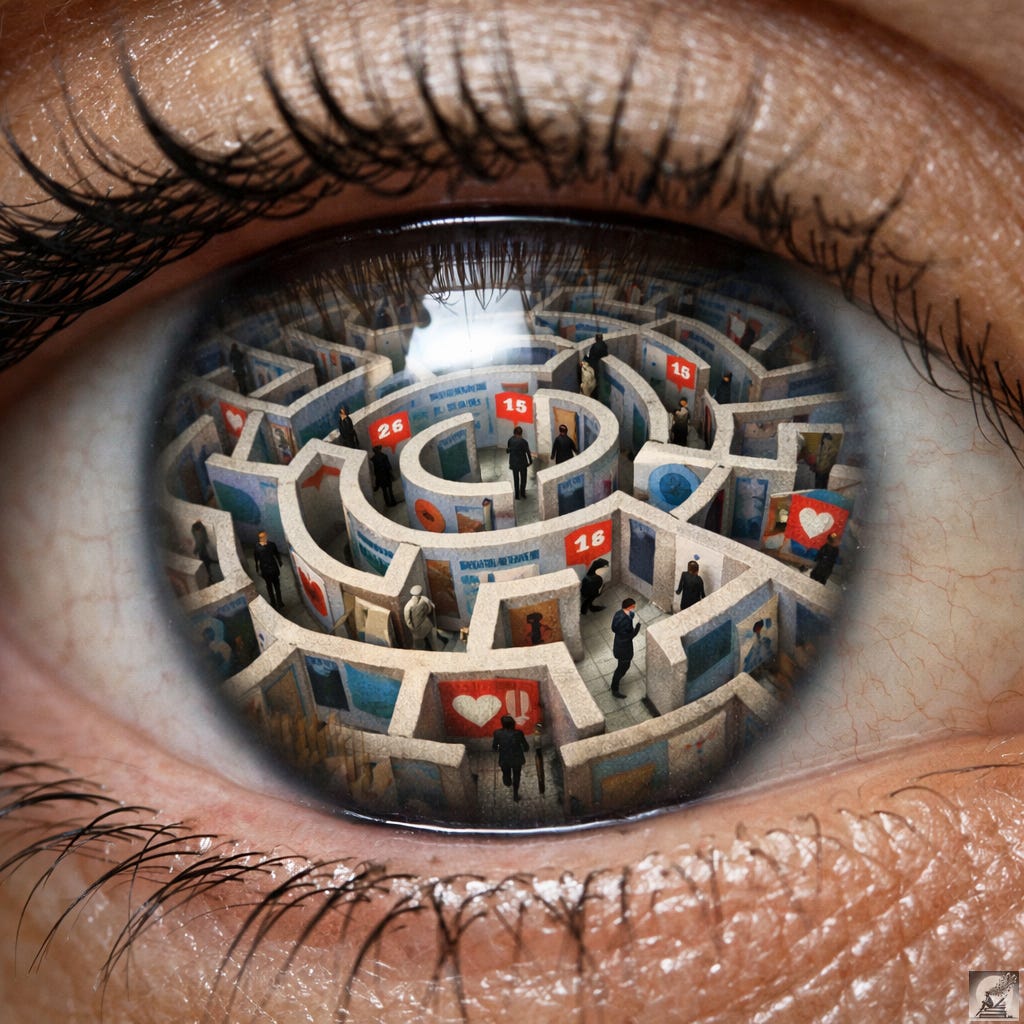
The Algorithm Already Decided Before You Did
That asymmetry is the signal.
Influence enters easily. It does not exit easily.
From the user’s perspective, nothing feels forced. No one issues instructions. No one imposes beliefs. Every action feels voluntary. Every follow feels earned.
From the outside, however, something else is happening.
The system is not just responding to preferences. It is shaping the conditions under which preferences form in the first place.
What looks like autonomy on the surface is infrastructure underneath.
And infrastructure, once built, does not need permission to continue operating.
The Algorithm Doesn’t Just Curate Information. It Constructs Trust.
The most important structural shift revealed in the study wasn’t simply increased exposure to certain viewpoints. It was the transformation of who people chose to follow.
Users who transitioned from a chronological feed to the algorithmic feed became significantly more likely to follow conservative political activist accounts. Crucially, they continued following those accounts even after the algorithm was turned off.
That’s the conversion point.
The algorithm doesn’t need to persuade you forever. It only needs to introduce you to the right voices early enough that you begin carrying the influence yourself.
External influence becomes internal preference.
Once that happens, the system can step back. The network you built under its guidance continues supplying information, framing interpretation, and reinforcing priorities.
At that point, the algorithm is no longer curating your feed.
It has already engineered the inputs that generate it.
The most important decision the algorithm makes isn’t what you see.
It’s who you trust.
Early Exposure Is the Moment of Maximum Influence
The study also revealed that the strongest structural effects occurred when users were initially switched from chronological feeds to algorithmic feeds. This onboarding phase proved far more consequential than any later adjustments.
This is when informational pathways are still flexible. When follow networks are still forming. When credibility has not yet solidified.
The algorithm intervenes precisely at this moment of maximum malleability.
It amplifies certain voices. It increases their visibility. It places them into the user’s informational environment with just enough repetition to create familiarity.
Familiarity becomes recognition.
Recognition becomes credibility.
Credibility becomes influence.
From the user’s perspective, these changes feel organic. Nothing appears imposed. The environment simply evolves.
But the direction of that evolution is not neutral.
It has already been shaped.

Influence That Persists Without Continued Intervention
One of the study’s most consequential findings is the persistence of influence even after the algorithm was disabled.
Users who adopted new follow relationships under algorithmic guidance did not revert when returned to a chronological feed. The structural changes remained intact. The accounts they followed continued delivering information, reinforcing interpretations, and shaping priorities.
The algorithm no longer needed to actively intervene.
It had already completed its most important work.
This is what persistent structural influence looks like.
Switching the algorithm on changed attitudes.
Switching it off did not change them back.
Like entropy, the system moves in one direction naturally.
You can push the boulder downhill with a finite shove.
Stopping the push does not bring it back uphill.
The Feed Is Not Just Delivering Information. It Is Constructing Reality
The most profound implication of the study is not ideological. It is structural.
The algorithm isn’t just delivering information. It is shaping the informational habitat in which beliefs form.
Who appears in your environment.
How often they appear.
Which topics feel constant.
Which interpretations arrive first.
Which voices feel credible.
Change that structure, and you don’t need to control conclusions directly.
People adapt to the informational environment they inhabit.
Their interpretations feel self-generated, even when the environment producing them was engineered.
This is not traditional persuasion.
It is habitat construction.
The algorithm isn’t just ranking your feed anymore.
It’s deciding who gets to exist inside your reality at all.
The System Doesn’t Need to Control You Forever. Only Long Enough.
Perhaps the most important insight from the study is that algorithmic influence does not need to remain active to remain effective.
Once follow networks, trust pathways, and informational dependencies are established, influence becomes self-sustaining.
The infrastructure persists.
Even if the algorithm were made fully transparent tomorrow, the networks it constructed would continue shaping perception. The informational channels have already been built. The relationships have already been formed. The credibility assignments have already been made.
By the time people begin asking how the system works, the system has already finished its most important work.
Influence no longer lives inside the code.
It lives inside the structure the code created.
The Most Powerful Algorithm Is the One You Stop Noticing
The most powerful algorithm isn’t the one that tells you what to think.
It’s the one that makes certain thoughts statistically inevitable.
Not by force.
Not by instruction.
But by quietly engineering the environment in which thought itself takes shape.
Long before you realize you’re walking a path, the terrain beneath you has already been constructed.
And from your perspective, it still feels like you chose it yourself.

The Damage is Done
Humans adapt to environments automatically.
Behavior follows naturally.
No visible force required.
That makes its influence persistent, scalable, and largely invisible.
The algorithm designs environments.
Because it shapes the conditions under which decisions emerge.
The Most Important Thing the Algorithm Did Already Happened

If this kind of analysis matters to you, subscribe.
These systems shape billions of people silently. Understanding them is no longer optional.
Independent research and writing like this only exists because readers support it. Consider paid subscription to help counter the billionaires schemes.
Your comrade in collective liberation,
Liberté, Égalité, Solidarité
~~☘️ Ginge ☘️
During the hearings last week in DC where Mr Zuckerberg and his friends were asked about their platforms controlling our lives, there was a perfect description of how this works:
The social media networks and platforms were designed to hook people like trolling for fish, hook ‘em, and then real them into addiction.
They called it a “digital casino” structured to make us “need” our drug.
The videos feeds from Fb, Insta, Snapchat, were specifically manufactured to make us feel like we have hit the jackpot every time we see something we like, over and over.
I have people in my circle who are completely addicted to this herion.
Yes...formerly known as systematic brainwashing...now it's 'algorithmic manipulation' and it has been creeping in since at least the 90's.. it just wasn't as sophisticated on all levels as it is now.